

There are two primary methods of die casting: cold chamber die casting and hot chamber die casting.
At DyCast Specialties, we are an industry leading supplier of high-quality aluminum and zinc die castings. Our full service capabilities enable us to serve as a single source for all die casting project needs, from initial design to casting to precision machining to finishing and assembly. All of our castings are custom formed, trimmed, machined, and finished to the customer’s exact specifications and standards, ensuring they perform as intended in the application environment.
Below, we provide an overview of the die casting process, including what it entails, the types of casting methods available, key advantages over other manufacturing methods, common materials used in die casting operations, and typical applications of die cast parts and products.
What Is Die Casting?
Die casting is a metal forming process that involves heating, melting, and pressurizing the metal, injecting the molten metal under high pressure into a custom made die, and allowing it to cool and harden into the desired shape.
While the steps in a die casting process may vary slightly from project to project depending on the part and production specifications, they generally include the following:
1. Creating a custom die for the specific part or product
2. Heating and melting the die casting alloy
3. Closing the two die halves together using the machine locking force
4. Injecting the molten metal into the die cavity
5. Allowing the metal to cool and solidify
6. Ejecting the cast part from the die
Types of Die Casting
Cold Chamber
In cold chamber die casting, the casting metal is heated and melted in an external furnace. The molten material is then manually or automatically transferred to the injection system, which, in turn, transfers the metal to the casting die. The advantage of this method over hot chamber die casting is its ability to accommodate a broader range of metals. Some metals have higher melting points than are practically achieved with integrated hot chambers. The external furnace component in cold chamber die casting equipment easily reaches the temperatures necessary for these metal. However, the additional step of moving the molten metal from the furnace to the injection system increases the overall production time and, consequently, the production costs.
Hot Chamber
In hot chamber die casting, the casting metal is heated and melted in a furnace integrated with the injection system. The chamber of the injection system is immersed in the molten metal, enabling it to draw and inject material into the cavity quickly and easily. As this method does not require the transference of molten metal between the furnace and injection system, it is faster than the cold chamber die casting process. However, since the hot chamber integrated furnace cannot achieve temperatures as high as the cold chamber external furnace, it is best suited for casting metals with lower melting temperatures, such as zinc.
Advantages of Die Casting
Compared to other manufacturing methods (including other casting methods), die casting offers a number of advantages, such as:
Greater strength with lower weight. Since die castings are not welded, fastened, or otherwise joined together, the maximum strength of the component is that of the base material rather than of the joint. Additionally, they exhibit greater strength than plastic injection molded components of the same shape and size and accommodate thinner walls than cast components made through other methods.
Higher accuracy. The die casting process creates parts and products that are dimensionally stable, meaning they are less likely to shrink or otherwise distort during the cooling and hardening stage. This quality makes it an ideal method for producing identical pieces with complex shapes to tight tolerances.
Faster production speeds. In die casting operations, a single die can impart all of the necessary design elements to the casting material in a single process. Additionally, the cast part produced generally requires little to no machining. As a result, manufacturers can produce large quantities of parts in shorter periods than is possible using other manufacturing methods.
Lower material cost and waste. Compared to subtractive manufacturing methods, die casting requires much less material and generates much less material waste.
Simpler assembly requirements. Die castings can be integrated with fastening elements (e.g., holes and threads) to facilitate final assembly operations.
Common Die Casting Alloys
The die casting process accommodates a wide range of materials, each of which offers unique characteristics that make it suitable for different cast parts and products. At DyCast Specialties, we utilize aluminum and zinc in our casting operations. Both of these metals and their alloys exhibit physical, mechanical, thermal, and chemical properties that make them ideal for use in castings.
-
Aluminum
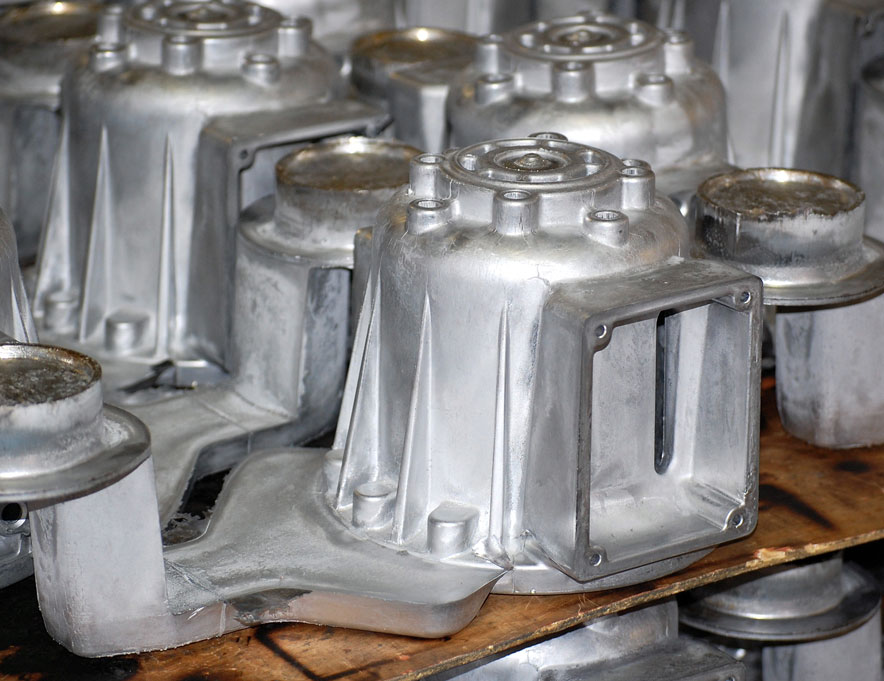
Aluminum is a strong but lightweight material that exhibits excellent thermal resistance and corrosion resistance, great thermal and electrical conductivity, and good finishing properties. However, as it is susceptible to cracking and shrinking in high temperatures, it is typically alloyed with copper or silicon to increase its hardness and fluidity. These characteristics, among others, make it an ideal material for die casting operations. Manufacturers can use it to produce stronger and lighter components that withstand use in demanding conditions (e.g., exposure to high operating temperatures or corrosive compounds). They can also use it to produce components with complex shapes and thin walls as it has exceptional dimensional stability.
The DyCast Specialties team works with the following aluminum alloys:
- 380
- 383
- 413
-
Zinc
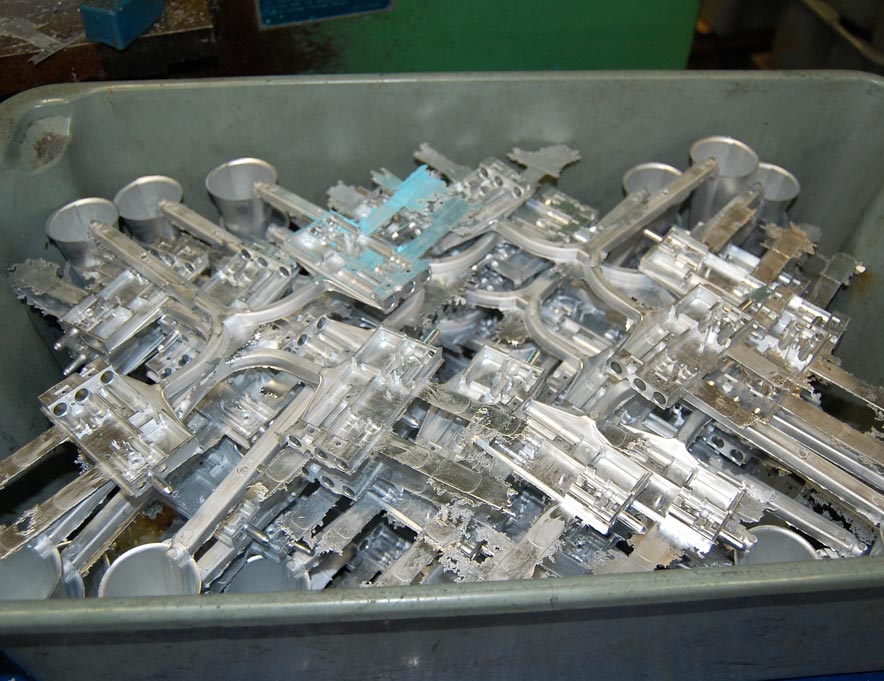
Zinc is a strong and hard material that demonstrates excellent corrosion resistance and electrical conductivity, great thermal conductivity and dimensional stability, and good thin wall and cold forming ability. These qualities, among others, makes it ideal for use in die casting operations. Manufacturers can use it to produce complex net-shape components with strong and sturdy thin walls.
The DyCast Specialties team works with the following zinc alloys:
- Zamak #3
- Zamak #5
- Zamak #7
-
Zinc-Aluminum
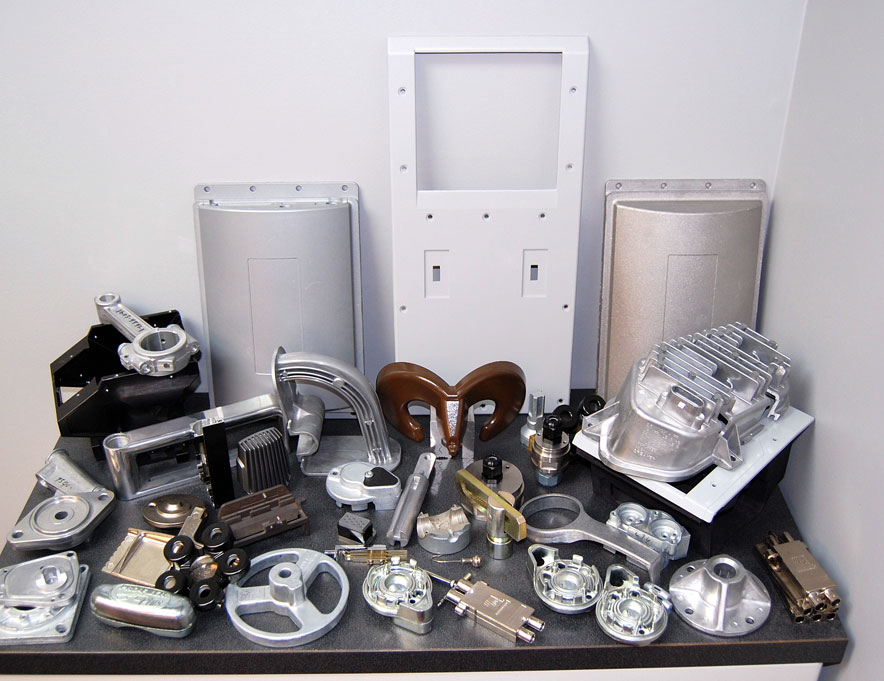
Zinc-aluminum alloys combine the properties of zinc and aluminum, resulting in materials that are lightweight along with excellent strength, hardness, and bearing properties. The mechanical properties vary slightly from alloy to alloy depending on the exact composition.
The DyCast Specialties team works with the following zinc-aluminum alloys:
- ZA-8
- ZA-27
Quality Die Castings from DyCast Specialties
If you’re looking for quality die castings, turn to the experts at DyCast Specialties. By partnering with us, you benefit from our:
Full-service die casting capabilities. We are a one-stop source for all aluminum and zinc casting needs. Our experts guide customers from initial design to casting to finishing to final assembly, ensuring they receive a cast component that fully meets their needs.
Highly responsive/flexible team members. Our team is trained to react and respond quickly to customers, answering and addressing any questions or issues that may arise during the project. As the business changes, they adapt to meet shifting customer needs.
Highly responsive/flexible team members. Our team is trained to react and respond quickly to customers, answering and addressing any questions or issues that may arise during the project. As the business changes, they adapt to meet shifting customer needs.
Pull replenishment systems. We offer Kanban programs to customers with high-volume contracts to help optimize their product inventories.
Zinc vs Aluminum Die Castings
The die casting industry uses aluminum and zinc alloys due to their malleability and ease of being cast into a wide range of shapes and configurations. The initial step in the die casting process is to select the correct metal for the component to be cast. This aspect of the process is crucial in regard to choosing the type of material that will meet the purposes, requirements, and design of a component as well as ensuring its optimization and utilization.
Since aluminum and zinc are the two most widely used metals for die casting, it is important to have an understanding of the differences between them in order to select the right metal for a component or part. Although zinc and aluminum are easy to melt, inject, and mold, they have very different characteristics and properties that determine their viability.
What are Zinc and Aluminum?
The unique characteristics of zinc and aluminum have led to their wide use in die casting. They are easy to form and are cost effective. Zinc alloys contain zinc that is alloyed with aluminum, magnesium, copper, cadmium, lead, titanium, and other low temperature alloys. The fluidity of zinc enables it to produce very small, miniature products with precision and extraordinary details.
In liquid its form, zinc is 204.4o C (400o F) cooler than aluminum, a factor that impacts the life and use of dies. Unlike aluminum, zinc does not have a chemical reaction with dies, which lengthens the life of dies 3 to 4 times over dies used for casting aluminum.
Zinc can be cast using the hot chamber process, which increases the speed of die casting. Unlike cold chamber die casting, hot chamber machines have the chamber or gooseneck submerged in a furnace filled with zinc. If the same process were used with aluminum, the gooseneck would melt due to the increased heat.
- Zinc is ideal for casting. It enables the manufacture of intricate thin-walled parts that have smooth surfaces.
- The various surface treatments used on zinc parts include electroplating, conversion coating, painting, spraying, polishing, and grinding.
- The aspects of zinc that make it ideal for die casting is its inability to absorb iron, high resistance to corrosion, and the fact that it does not stick to a mold or react to the metal in the mold.
- One of the primary mechanical properties of zinc is its resistance to wear at ambient temperatures.
- The ease of casting zinc is due to its melting point of 385o C (725o F), which enables zinc to be cast and shaped with little effort.
Aluminum comes in a long list of grades that range from 99% aluminum content up to ones with 95% aluminum content. The variations between the grades are in regard to the types of alloys the aluminum has been alloyed with. Common aluminum alloys are copper, silicon, magnesium, zinc, and magnesium with secondary alloys being nickel, iron, titanium, chromium, and lithium. Although aluminum has lower density than steel, it has an exceptional strength to weight ratio with some aluminum alloys being stronger than steel.
- One of the main reasons for the use of aluminum alloys in manufacturing is its lightweight, which makes it ideal for automobile manufacturing and the aerospace industry.
- By modern standards, aluminum is highly regarded for its recyclability and environmentally friendly aspects.
- The high thermal conductivity, which varies between grades of aluminum, makes it an excellent heat conductor. The thermal conductivity of aluminum varies between 237 W/m-K for pure aluminum and 130 W/m-K for high grades.
- In low temperature environments, aluminum alloys retain their strength and toughness without becoming brittle.
- When heat treated, aluminum increases its mechanical properties, physical characteristics, and resistance to corrosion.
- As with the other factors of aluminum, the strength of aluminum varies in accordance with its alloys. The grades of aluminum begin with the 1000 series, which has the lowest strength. From the 1000 series, the strength of aluminum gradually increases to tensile strengths of 560 MPa.
Differences
In their pure forms, zinc and aluminum are quite different. Pure, unalloyed zinc is harder than pure aluminum. This differentiation changes after the metals are alloyed with aluminum becoming much harder and stronger than zinc.
Hardness
The hardness of aluminum on the Vicker’s hardness scale is 15 to 30 HV in its pure form, while Zinc’s hardness is 30 to 60 HV in its pure form. On the Brinell and Rockwell C scales zinc and aluminum are very soft when compared to steel.
Strength
Aluminum alloys have greater tensile strength and yield strength than pure zinc with some aluminum alloys being vastly stronger than zinc alloys.
Effects of Temperature
At -10o to -20o C (14o to -4o F), zinc becomes brittle while aluminum retains its ductility. The strength of both metals changes slightly with the addition of alloys.
Applications
Zinc is a preferred metal for die casting, coatings, and the manufacture of bearings. It has a higher as-cast hardness than pure aluminum. Various aluminum alloys have very high strength to weight ratios and exceptional fatigue resistance.
Uses for Die Casting
The three metals that are commonly used for die casting are magnesium, zinc and aluminum. Each metal has excellent properties and is ideal for the die casting process. There are conditions, situations, and applications where one of the metals is a better choice than the others.
- Zinc – Zinc is normally die cast for high yield designs that require resistance to stress.
- Aluminum – Aluminum is normally used for applications that involve high temperatures and require longevity.
Zinc
Zinc alloys are used for die casting due to its low cost, strength, and stability. It has exceptional electrical and thermal conductivity and is corrosion resistance, ensuring that components will last long. Zinc is easily castable due to its low melting temperature.
Aluminum
Aluminum is economical and versatile. The wide use of aluminum is due to its ability to withstand high operating temperatures. The main characteristics that have made aluminum so popular in modern industry is its lightweight, high strength-to-weight ratio, and long useful life.
Recyclability
Zinc and aluminum are very recyclable metals with aluminum saving 95% of energy needed for new production. The recycling of zinc is more challenging due its impurities and the need for complex processes. The recyclability of both metals significantly reduces energy consumption compared to other metals. Recycled aluminum and zinc are used for the manufacture of new products without losing their properties.
Aluminum
Aluminum is easily recycled with about 80% of aluminum products being made from it. Compared to primary aluminum, recycled aluminum requires 5% of the necessary energy needed to smelt it, which reduces emissions and production costs. Over 75% of aluminum processed as primary aluminum is still in circulation today thanks to the many concerted recycling efforts.
Nearly four times more recycled aluminum or secondary aluminum is produced than primary aluminum. Recycled aluminum accounts for 34% of the new supply of aluminum. The key to the success of recycling of aluminum are the many collection efforts that gathers alloy scrap, casting scraps, beverage cans, car parts, and other used aluminum products.
Prior to recycled or secondary aluminum being used for manufacturing, it undergoes a pre-treatment where the scrap is baled, shredded, crushed, de-coated, and demagnetized. De-coating removes paint while demagnetizing removes iron particles that cling to aluminum scraps. In addition, pre-treatment improves the metals density and removes contaminants to make the melting process more efficient and produce cleaner aluminum that does not have dross formations.
Once the scrap aluminum is prepared, the manufacturing process follows the same steps as those used with primary aluminum. It is melted, treated, and refined before being injected into a mold. The one step in the process that is added is inclusion of chlorine gas to remove any impurities that may remain after the previous treatments.
The wide use of recycled aluminum is due to its energy and environmental savings. The use of recycled aluminum supports the world’s decarbonization efforts that has the goal of significantly reducing greenhouse emissions.
Zinc
About 70% of zinc products are made from mined zinc ore with 30% of products being produced from recycled or secondary zinc. The recycling of zinc is a major part of sustainability efforts that have the aim of minimizing the environmental impact connected with manufacture of zinc. As with aluminum, zinc has a high recycling rate, which is derived from collecting scrap zinc from industrial waste, end of life products, and manufacturing offcuts. Just like aluminum, the collected scrap zinc is shredded and sorted before being melted for reuse.
Unlike aluminum, the recycling of zinc faces several challenges due to zinc’s impurities and alloying elements. The nature of the recycling concerns is in regard to the effect of the impurities on the quality and properties of the products produced from recycled zinc. The inclusion of impurities in zinc necessitates the use of time consuming and expensive purification methods.
Although aluminum collection has a vast network, zinc recycling has logistic and processing problems that are complex and resource intensive with a limited infrastructure. Unlike traditional collection methods for recycling, zinc recycling collection does not always produce high quality zinc that is reliable and re-useable. In addition, the ever-changing prices of zinc and its demand impact the economic viability of any recycling efforts, which discourages recycling operators from putting any effort into recycling zinc. Improper handling of the recycling process can cause dangerous emissions and waste creating an environmental impact and contamination.
Zinc scrap is classified by the Institute of Scrap Recycling Industries (ISRI) into different categories based on composition and source of zinc. The most common and reliable sources of zinc scrap, referred to as new zinc scrap, are sheets, pipes, or stampings. Old zinc scrap includes materials from demolitions, renovations, and end of life products, which include galvanized steel scrap, zinc die-castings, and zinc dross. The new plated zinc die cast scrap category includes clean, plated zinc die cast scrap from manufacturing operations
The ISRI provides stipulations in regard to the types of recycled zinc alloys that conform to the chemical specifications for zinc that is suitable for reprocessing. Zinc scraps are carefully sorted and processed for recycling, in accordance with ISRI requirements.
Regardless of the difficulties associated with the recycling of zinc, manufacturers have worked diligently to develop methods to streamline the process. The difficulties with recycling zinc is related to separating it from galvanized steel. The most widely used recycling method is electric arc furnace (EAF) heating, which heats scrap until the zinc content volatizes and separates as a gas. As the gas is treated and collected, the zinc decomposes into a dust that is treated in a Waelz kiln where the dust becomes zinc oxide that is used for the production of zinc metal.
As of the present, 40% of zinc that is used for manufacturing comes from reclaimed zinc sources. It is the hope of manufacturers that with technological advances that zinc recycling will become more viable increasing the amount of reclaimed zinc and lowering the impact of zinc production on the environment.
Zinc vs. Aluminum: Wrap-Up
Aluminum and zinc are key elements in the manufacture of 21st century products. Their similarities and differences enable them to be configured and shaped to meet the requirements of different applications. As widely used as aluminum and zinc products are, manufacturers, in an effort to comply with sustainability efforts and reduce environmental impact, are constantly working to find methods for reusing existing sources of these metals without having to constantly return to primary sources.